

What Custom Office Furniture Trends are Shaping Modern Workspaces?
Workplaces are no longer built around rows of identical desks and fixed seating. Hybrid schedules, rapid growth, and shifting employee expectations are making many offices feel outdated almost as soon as they are installed. When furniture cannot adapt, the space starts working against productivity, culture, and even recruiting.
That friction is pushing leaders toward a new standard: custom office furniture designed for real workflows, real people, and real square footage. The most influential office design trends all point in the same direction: flexible, wellness-forward, sustainable spaces with technology baked in. Custom solutions are the most straightforward way to get there without compromise.
1. Flexibility First: Modular, Mobile, and Multi-Use
One of the most significant shifts in modern workspaces is the move from assigned seating to activity-based environments. Employees need to float between focused work, casual collaboration, and formal meetings, sometimes in the same hour. Furniture has to keep up.
Custom-built modular systems make that possible. Think reconfigurable benching with add-on privacy screens, nesting tables that roll into training setups, and storage walls that double as space dividers. Instead of buying separate pieces that almost fit, a custom design lets dimensions, wiring paths, and mobility features match the floor plan exactly. You get a space that can flex with headcount, teams, or new ways of working, rather than forcing a renovation every time the org chart changes.
This trend also includes “neighborhood” layouts: clusters of workpoints paired with shared resources like touchdown counters, lockers, and small meeting zones. With custom office furniture, those neighborhoods can be tuned to specific departments. A sales pod may need more quick huddle space and plug-and-play screens, while product teams may need larger tables, writable surfaces, and more acoustic buffering.
2. Wellness-Centered Design Is No Longer Optional
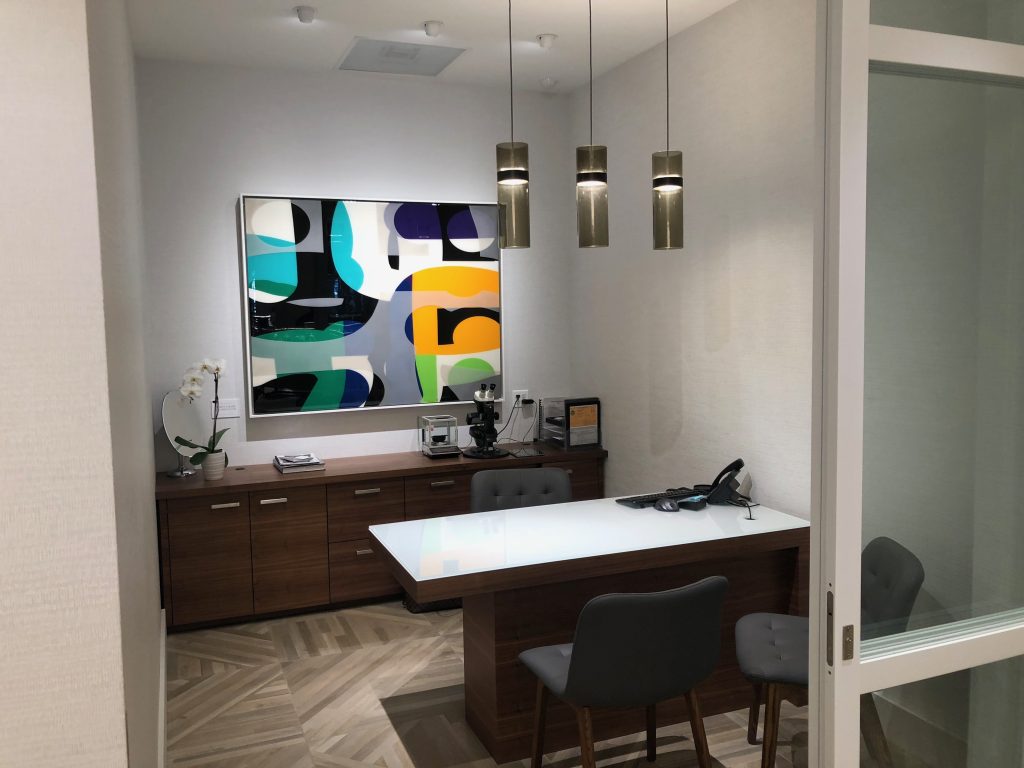
Employee well-being has moved from a perk to a performance strategy. Modern office design trends heavily emphasize ergonomics and physical comfort because leaders are seeing a direct link to retention, engagement, and fewer sick days.
Ergonomic seating and sit-stand workstations are now table stakes, but the next layer is customization for varied bodies and tasks. Custom desks can be built to ideal heights, include curved cutouts for better posture, and integrate monitor arms and footrests cleanly. Conference rooms benefit from tables designed for inclusive seating, wheelchair clearance, and improved sightlines.
Wellness also covers sensory comfort. Acoustic panels, felt-lined dividers, and soft-touch surfaces reduce noise fatigue in open plans. At the same time, biophilic integrations, such as planter-edged benches or natural-wood finishes, support calmer, more restorative environments. Custom furniture helps because materials and layouts can be chosen to balance collaboration with quiet, not one at the expense of the other.
3. Sustainability and the Rise of “Long-Life” Furniture
Sustainability has become a core expectation in modern workspaces, especially for companies that recruit mission-driven talent or report ESG metrics. Furniture decisions are part of that story. The key trend is moving away from disposable, fast-furniture cycles and toward long-life pieces built from responsible materials.
Custom manufacturing supports this in two ways. First, a made-to-fit approach reduces waste by eliminating the need for awkward gaps, add-on fillers, or replacement pieces that did not work out. Second, custom pieces can be engineered for durability and repairability: thicker wear surfaces, replaceable panels, and modular components that evolve with the office rather than landing in a landfill.
Material choices matter here, too. More projects are specifying low-VOC coatings, recycled metals, FSC-certified woods, and laminates engineered for longevity. When furniture is custom, those material goals can be honored without having to “take what is available.” You can match a sustainability brief precisely with custom furniture.
4. Tech Integration That Disappears Into the Design
Technology is now a structural requirement, not an accessory. If power, data, and video tools are tacked on after the fact, they create clutter, tripping hazards, and constant frustration. Smart office design trends focus on embedding tech, so the workspace feels seamless.
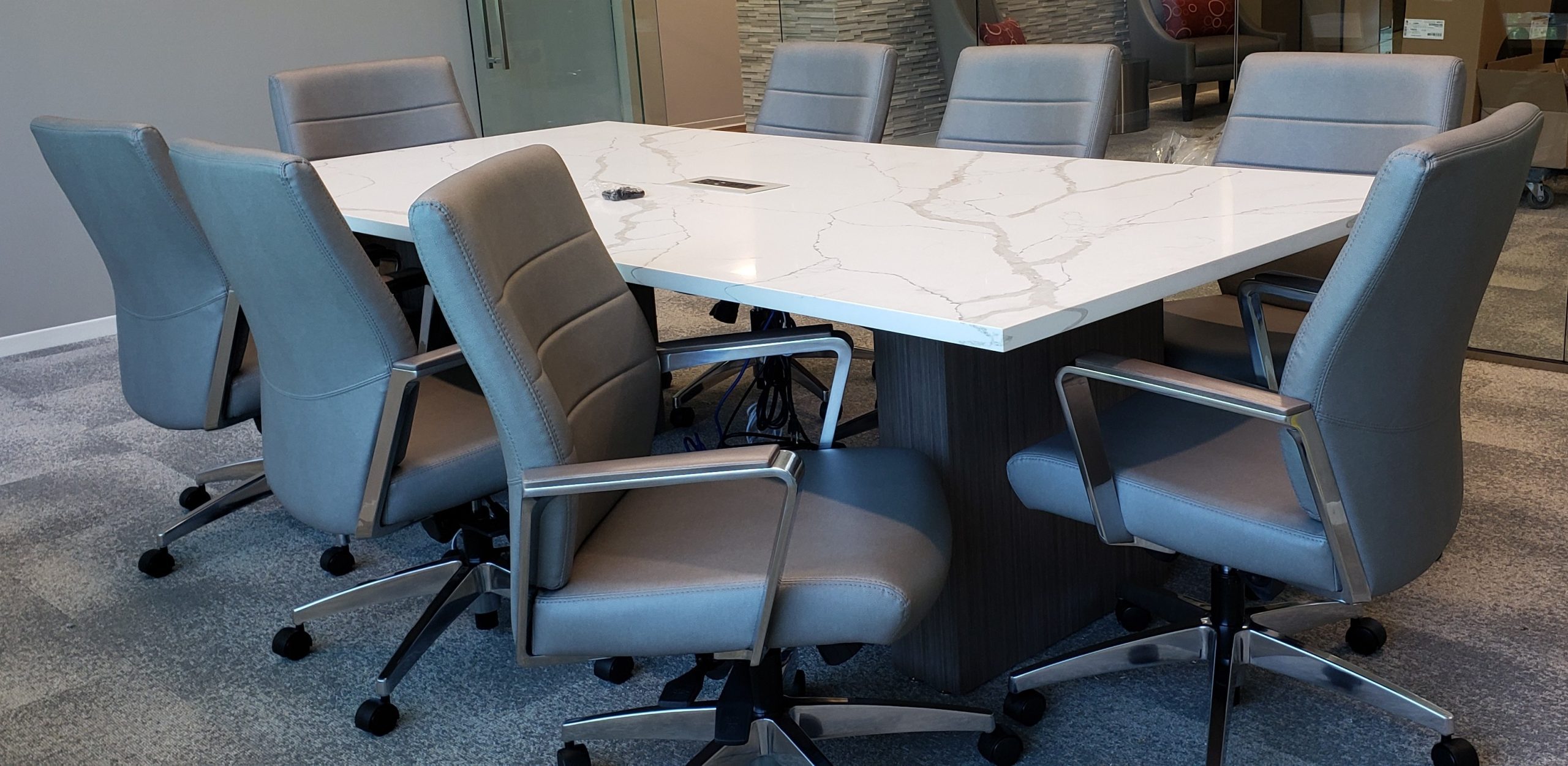
Custom office tables can include built-in wireless charging, pop-up power towers, and cable channels that keep surfaces clean. Benching can hide shared docking stations inside modesty panels. Reception and collaboration zones can be designed around screens, wayfinding, or booking displays so tech enhances the experience rather than interrupting it.
Even in smaller spaces, custom design helps. A compact hybrid meeting room may need a conference table that fits a specific camera angle, lighting footprint, and speaker placement. Standard sizes rarely align with those constraints. Custom sizing and integrated hardware create rooms that work on day one, with no trial-and-error spend.
5. Personalization and Brand-Forward Craft
As companies pull people back on-site, the office must earn the commute. Employees are drawn to spaces that feel intentional and human, not cookie-cutter. That is why customization is rising as an identity tool in modern workspaces.
Custom office furniture enables culture to be expressed through the physical environment: hospitality-style lounge areas for client-facing teams, maker-focused hubs for creative groups, or refined executive suites that convey trust and stability. Finishes, forms, and materials can echo the brand without turning the office into a showroom. The result is a workplace that supports the work and tells a story to everyone who walks in.
In practice, this could mean a signature reception station, built-in display shelving for products or awards, or a suite of conference tables that share a consistent design language. When furniture is custom, these details feel cohesive rather than pieced together from different catalogs.
Custom Is the Strategy, Not a Splurge
The trends defining the next generation of workplaces are clear: flexibility, wellness, sustainability, and technology integration. What is less obvious, until you see it in action, is that most of these goals are hard to hit with off-the-shelf furniture. Standard products are designed for average spaces and average workflows. Modern companies are not average.
Custom office furniture bridges that gap. It aligns the physical environment with how teams actually work, how the brand wants to show up, and how the office will need to change over the next five to ten years. That is why customization is no longer a luxury add-on. It is the most direct route to a workspace that stays relevant, resilient, and genuinely helpful.
Do You Want to Build a Workspace That Fits the Future?
If these office design trends are on your roadmap, the next step is to turn them into a plan that aligns with your goals and your square footage. Display Craft specializes in custom office furniture that brings flexibility, wellness, sustainability, and smart integration together into one cohesive environment. Explore what is possible for your space and start a conversation about a solution built specifically for how your teams work.
